Portfolio

Real projects, in production.

Real cases: production-line revamps, stator winding lines, MES/SCADA, and robotics for automotive, e-mobility, food & beverage. Turin, across Italy.

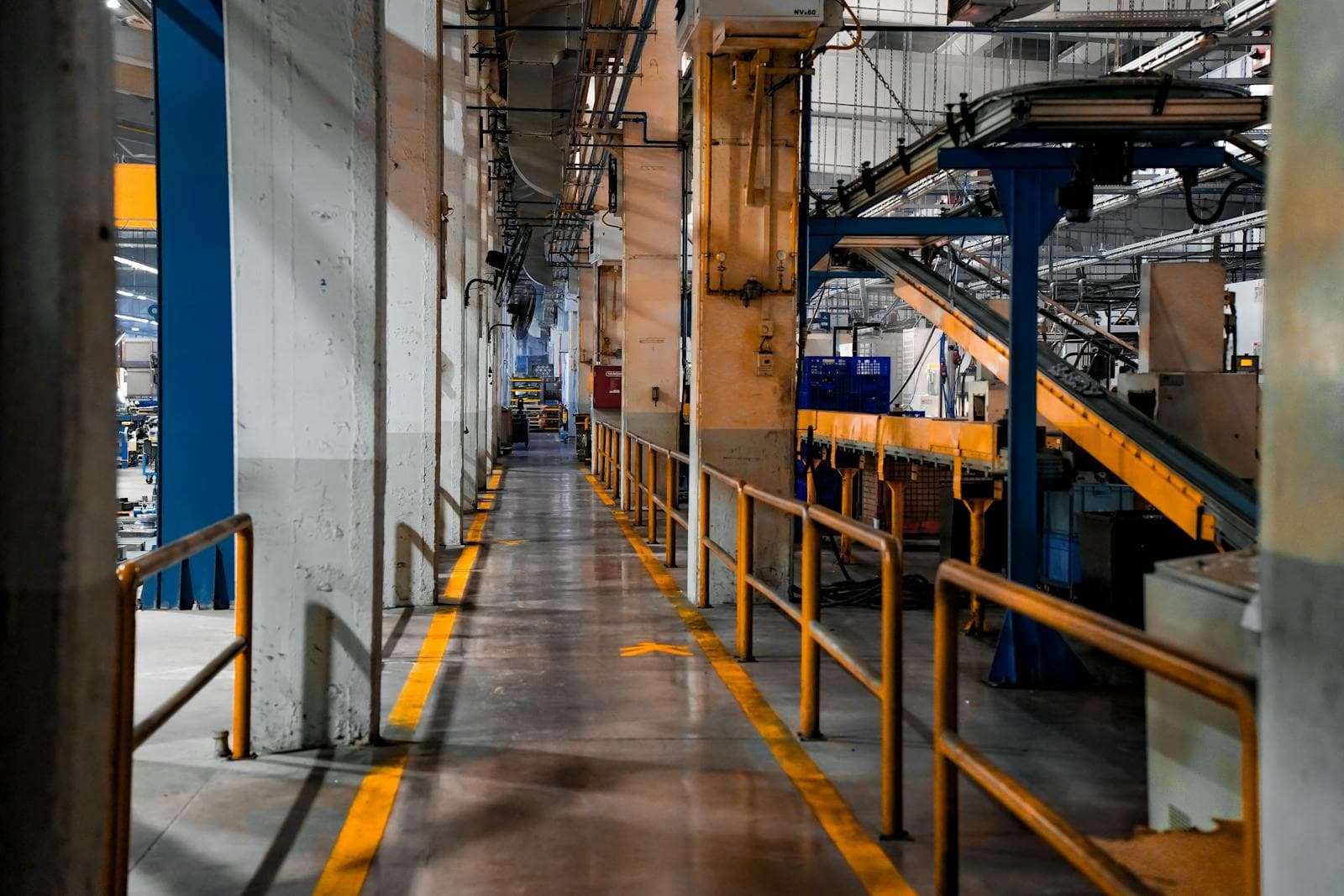
Automotive line aisle with overhead conveyors and yellow guard rails
Case · 01
Automotive · E-Mobility

Automated stator production line

Client
CM Srl
Situation
CM Srl, a Turin-based builder of production technology for electric motors, had to deliver to its e-mobility customer not a fleet of machines but a line. Its stations were stand-alone: stator-stack forming and insulation, coil winding and insertion, end-winding forming, terminal connection, taping, electrical testing. They had to work as a single plant at the pace of serial production.
Complexity
15+ independent process stations, each with its own control, and heavy kinematics: winding on 42 synchronous axes, insulation with virtual-camming axes, palletizing with machine vision. Putting machines that were born stand-alone into a line means deciding who drives the flow, how the part is handed off, and what happens when a station stops. All without rewriting the process know-how CM has built into every machine. No single vendor covered the full scope.
What IOMA did
Distributed architecture: a dedicated PLC per station (S7-1516TF on the critical ones), 42 Sinamics S210 servo drives in virtual camming on the winding station, machine vision on the palletizing cell. 40+ ARIA HMI operator stations on the shop floor, with ARIA SCADA orchestrating the entire line. Part traceability, line flow, andon, OEE and availability, alarms, role-based access, and per-station status. IOMA also handled the industrial network and the servers behind the software layer.
Result
Required production takt reached within the industrial-plan timeline. Mean time to identify the faulty component dropped from hours to minutes thanks to the unified ARIA dashboard. Line configuration replicated on two twin plants without rewriting PLC code.
Skills used
  • Line integration of stand-alone machines
  • 40+ ARIA HMI operator stations
  • 42× S210 servos in virtual camming
  • Line orchestration on ARIA SCADA
  • 15+ stations with dedicated PLC (S7-1516TF)
  • Machine vision on palletizing
  • OEE, andon, and traceability
  • Industrial network and server management
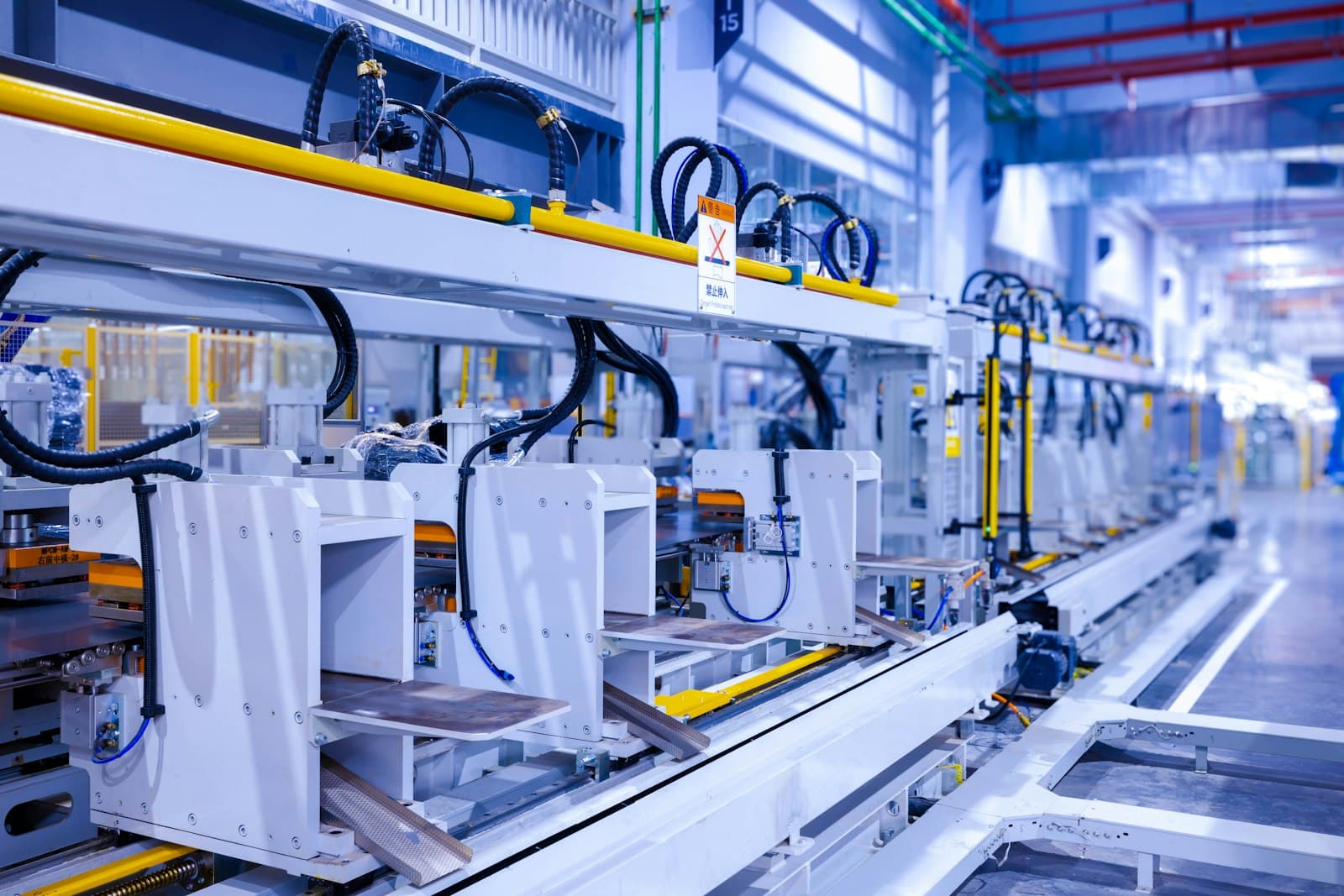
Multi-station production line with automated machines arranged along an industrial corridor
Case · 02
Automotive · E-Mobility

Multi-product line

Client
CM Srl
Situation
CM Srl had to deliver an assembly line to its automotive customer capable of running multiple product variants on the same structure, with the mix decided day by day. The project had stalled after a first attempt by another vendor, who had failed to get the line running. IOMA took over work already underway, with changeover still manual at 45 to 90 minutes and a legacy SCADA with no structured recipe management. Every new model required PLC intervention and recompiling.
Complexity
Taking over from another vendor on a line that isn't running is not the same as starting from a blank sheet. You have to work out what's there, what to keep, and what to redo, while the customer is waiting for a line in production. And a multi-product line is only flexible if the product flow can be redefined without touching the code. The configuration — sequences, parameters, tolerances — has to move out of the PLC program and into a layer a production technician can use. Without losing precision and repeatability on the critical axes.
What IOMA did
Standard software architecture on top of a Siemens S7-1515T PLC, fully configurable from SCADA, with four V90/S120 servo drives on the critical axes for precision and repeatability. ARIA SCADA manages the multi-product recipes: model changeover via recipe selection, parameters imported and exported over OPC UA from the ERP. In this case, the machine HMI is not ARIA. IOMA also handled the industrial network and the servers behind the software layer.
Result
Format changeover from 45+ minutes down to under 8. Adding a new product variant became a master-data task in the ERP, not an automation project: zero PLC code written for new models after go-live.
Skills used
  • PLC S7-1515T
  • Multi-product recipes on ARIA SCADA
  • 4× V90/S120
  • OPC UA import/export
  • Industrial network and server management
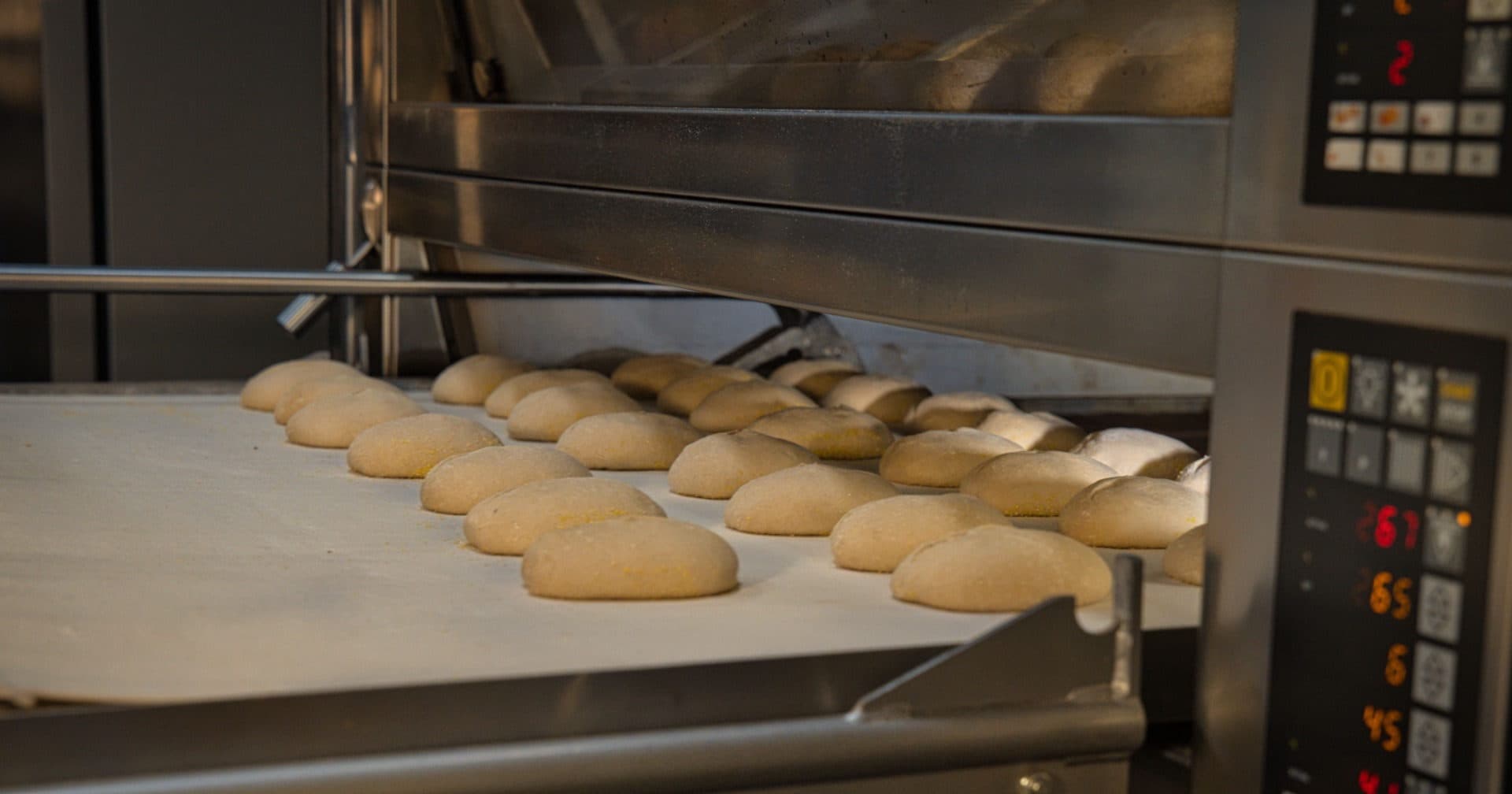
Multi-deck stainless steel industrial bakery oven with floured dough pieces on a loading conveyor and digital control panels
Case · 03
F&B

Emergency revamp: bakery line back in production within two months

Client
La Torinese 1932
Situation
La Torinese 1932 — a historic large-leavened-cake brand of the IDB group, Industria Dolciaria Borsari — bakes panettone and colomba cakes on a line in Turin. The line moves the product from loading through baking, passing through proving in a controlled-atmosphere environment. The line had come to a complete stop, its controls running on end-of-life hardware, and we stepped in as an emergency job. The request wasn't to get it moving again just to close out the season: it was to put it in shape to run for the next ten years.
Complexity
A revamp on an existing plant is not a greenfield project, and doing it under time pressure leaves no room for a separate study phase. The line is a continuous system: batch loading, moving the product through proving, unloading onto a conveyor, finishing touches, baking. Every stage had to be rebuilt and brought back into sync while the PLC and drives were being replaced. On top of that, the safety hardware upgrade required for machine certification, and a non-negotiable deadline: two months, with Christmas deliveries that couldn't slip.
What IOMA did
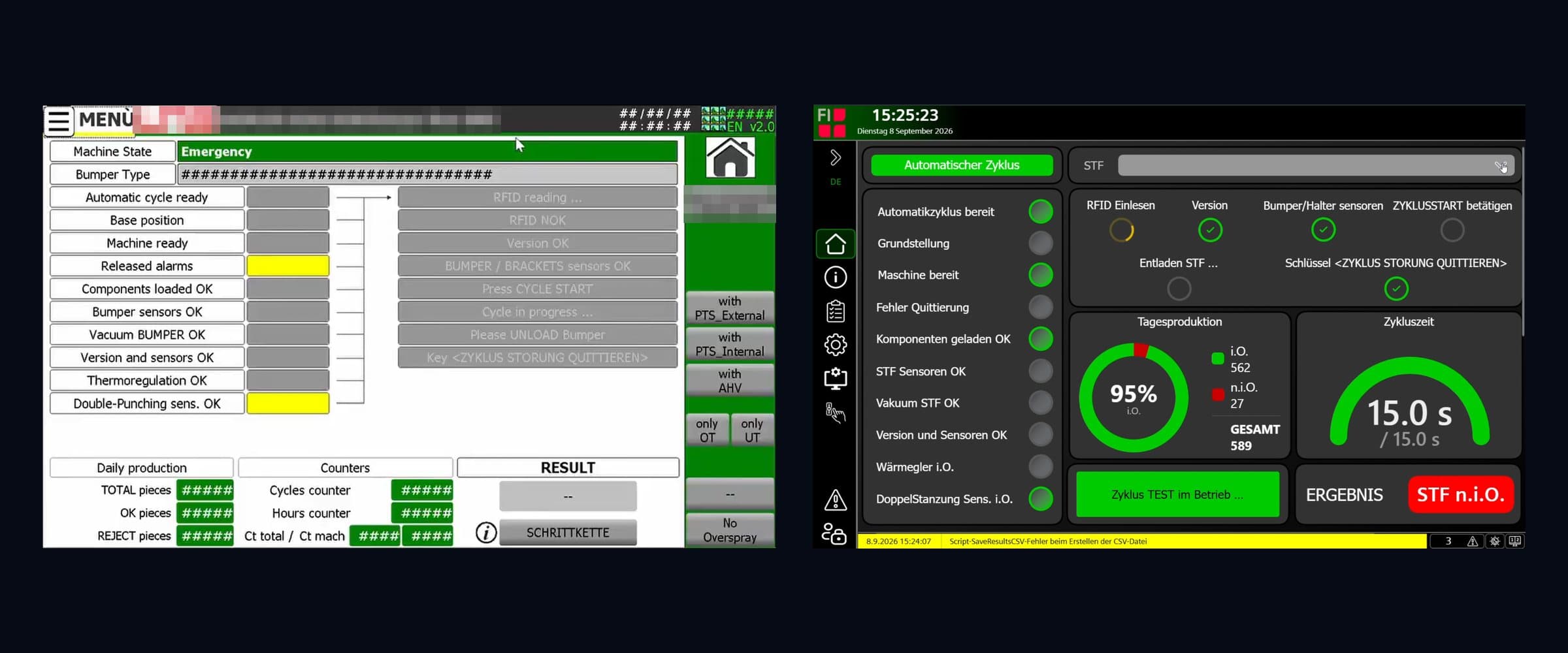
Replacement of the cabinet PLC with a Siemens S7-1500 and of both servo drives in place, with a safety hardware review for certification. Line software rewritten entirely, with new cycle, process-parameter, and recipe management, plus new hardware and software capabilities beyond the original plant. Web-based HMI built on the ARIA platform: accessible from a browser, not tied to a cabinet panel. IOMA also handled the industrial network and the servers behind the software layer.
Result
Line back up within the two-month window, in time for Christmas deliveries, and fully productive from the first day back. Line stoppages cut by around 20%; after a stop, production restarts immediately, where it used to take several hours to get the line back into cycle. Production staff now have far more parameters and adjustment ranges, and diagnostics that make the line's state visible instead of something to infer. The web HMI is faster and more responsive than the legacy panel it replaced, and it's ready for tablet use right on the line.
Skills used
  • Siemens S7-1500 PLC
  • 2× servo axes replaced
  • Safety hardware for certification
  • Web-based HMI on ARIA
  • Line software rewritten
  • Cycle and recipe management
  • Industrial network and server management
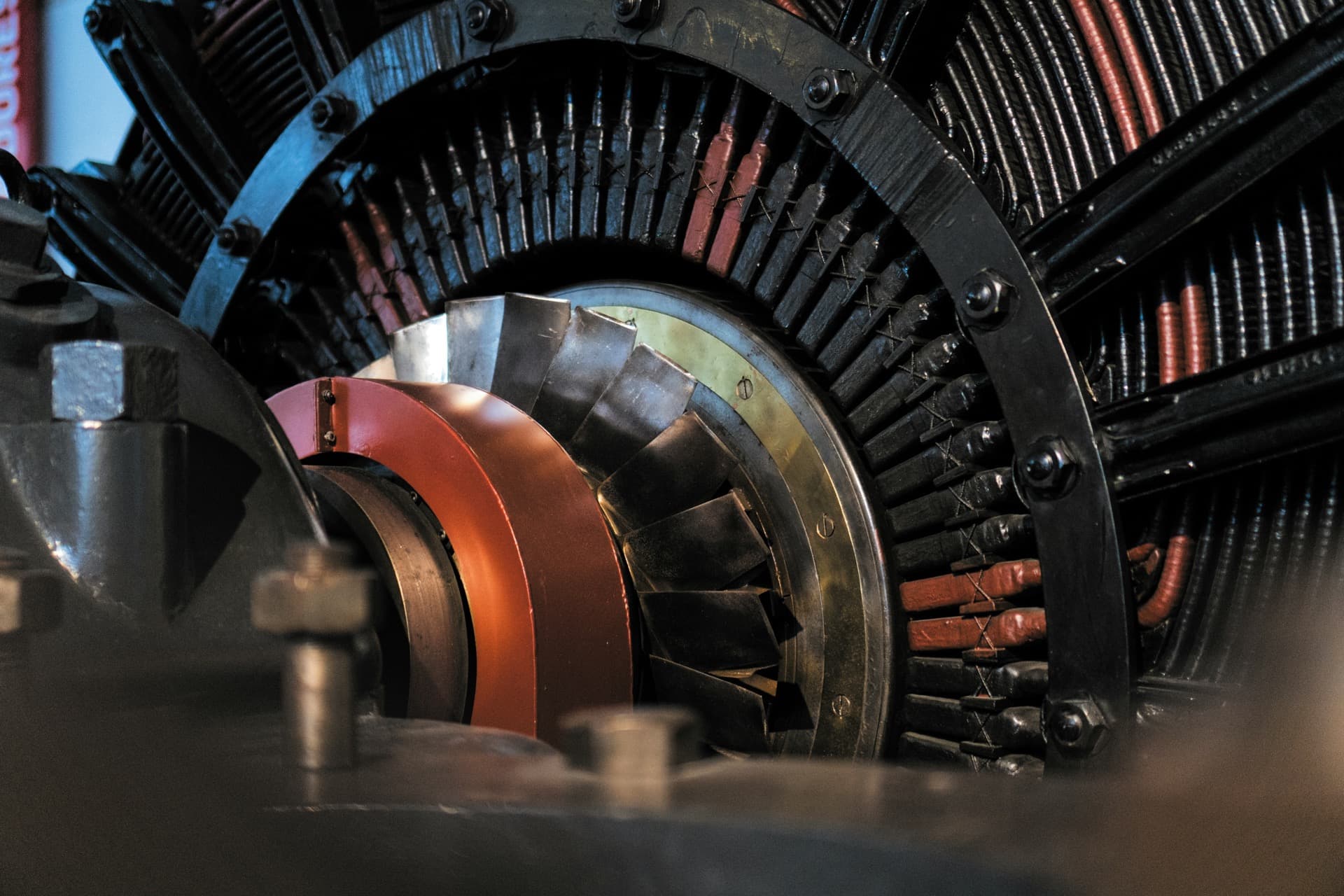
Close-up of a stator winding with copper coil bars cross-laced around the laminated core and a bronze end ring
Case · 04
Automotive · E-Mobility

ARIA SCADA on board electric-motor production machines

Client
Nide Wintech Automation
Situation
Nide Wintech Automation is a machine builder in Collegno (Turin) building machines and lines for electric-motor production: needle winding, flyer, concentric, and hairpin winding, stator-rotor assembly, electrical testing. It sells to manufacturers worldwide. Its customers were asking for two things at once: supervision software that matched the quality of the machines, and machines that met the requirements for Industry 4.0 compliance.
Complexity
On-board software for a machine builder isn't a bespoke project for a single plant. It has to run on different models, from a single stand-alone machine to a complete line, and be commissioned by the builder's own teams on distant job sites. And Industry 4.0 compliance can't be satisfied with a label. It calls for real interconnection to the factory's IT systems, continuous monitoring of process parameters, and remote diagnostics, each demonstrable to an auditor rather than merely asserted.
What IOMA did
ARIA SCADA installed as the standard supervision layer on the machine builder's stand-alone machines and lines. A uniform web-based interface across the different models, capture and historization of process parameters, recipe and alarm management, and remote access for diagnostics and support. Interconnection with the end customer's factory IT systems is part of the supply, not an integration left for later. IOMA also handled the industrial network and the servers behind the software layer.
Result
The machine builder ships its machines with state-of-the-art supervision without keeping a software team in-house. Its customers achieved Industry 4.0 compliance for their machines, with interconnection, parameter monitoring, and remote diagnostics already on board. The same supervision environment is replicable on every new machine sold.
Skills used
  • ARIA SCADA on board the machine
  • Industry 4.0 requirements: interconnection and monitoring
  • Remote diagnostics and support
  • Process-parameter historization
  • Recipes and alarm management
  • Standard replicable across models
  • Industrial network and server management
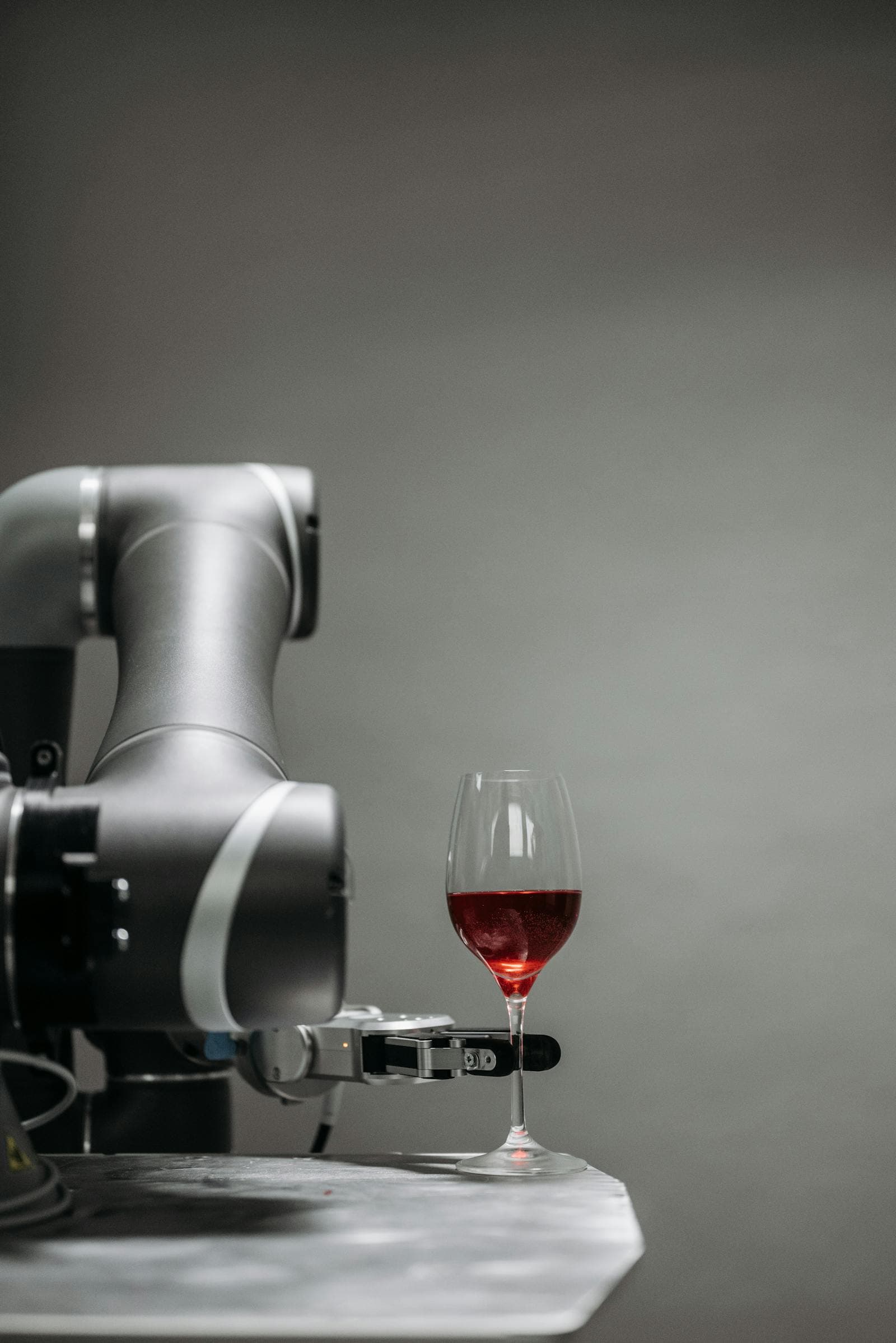
Collaborative robotic arm grasping a cocktail glass
Case · 05
F&B

Robotic cocktail island

Client not named
Situation
A company that designs and builds robotic systems for the food-service industry needed to add to its catalog a cocktail island that was scenic and replicable at its clients' sites. Not a bespoke setup for a single venue: live preparation with robotic choreography, centrally managed recipes, and orders accepted from a customer app or an in-venue kiosk.
Complexity
Floor staff should never have to become robot programmers, and every new cocktail had to be added without touching firmware. It meant coordinating safe arm motion, the recipe catalog, and order intake from app and kiosk in a single system.
What IOMA did
Siemens S7-1200 PLC for motion control, MQTT for order intake from a dedicated mobile app and in-venue kiosks, with dedicated HMI graphics for queue progress. The robotic arms are programmed with combinable primitives (grab, pour, shake, garnish): recipes are generated dynamically, including for cocktails created by the user in the app. They can be entered and customized instantly from a management interface dedicated to the operator, with no changes to the robot's code. IOMA also handled the network and servers behind the software layer.
Result
Showpiece cocktail served end-to-end in under 90 seconds. Catalog extended from 12 initial recipes to 30+ within four months with zero firmware updates. Layout replicable to new installations as a configuration copy.
Skills used
  • Siemens S7-1200
  • Orders via MQTT
  • Choreographed robotic arms
  • Mobile ordering app
  • Recipe management interface
  • Dynamically generated recipes
  • Queue-progress HMI
  • Network and server management

We're adding more cases.

The projects featured here are a curated selection: many of our customers prefer to stay out of the public eye. For the full picture of our work, write to us and we'll set up a conversation.

Let's talk

Got a project in mind?

Describe the line and the problem on a 30-minute technical call: we tell you straight away whether it's in our wheelhouse. We typically reply within 24 hours. From the first call to commissioning, you speak to the same person.

Let's talk about your project

Or:explore the ARIA platformhey@ioma.ai